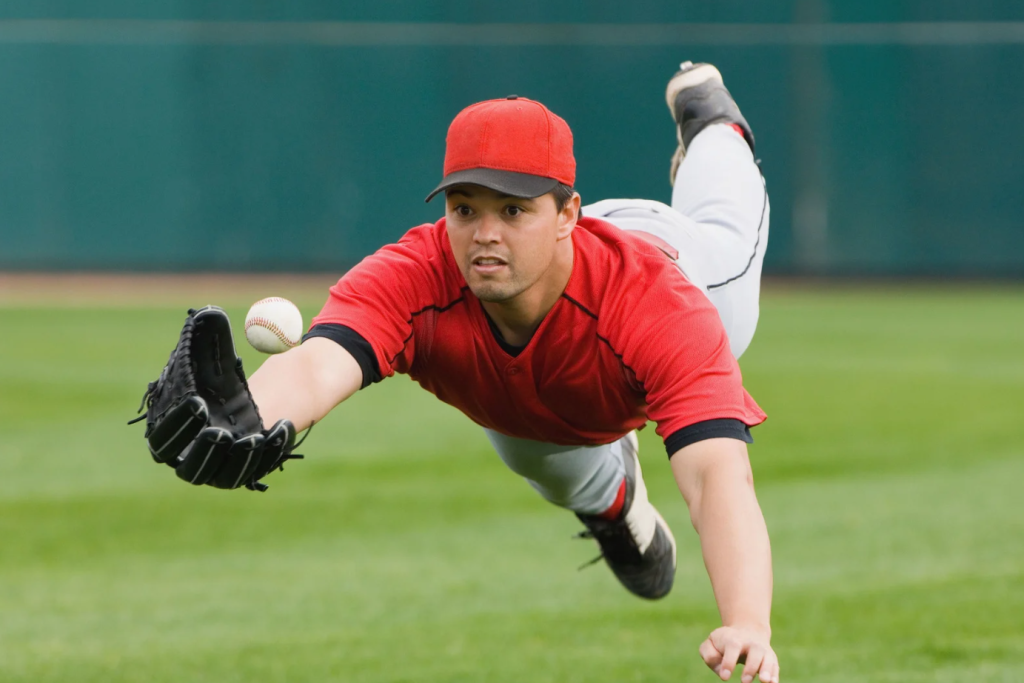
Many young ball players face a common hurdle: they lack the athleticism to play defense at a high level. To field a ground ball or charge a bunt efficiently, movements must be fluid—and that requires agility. When it comes to fielding, agility means executing rapid movements in constantly changing, unpredictable environments.
So, what exactly IS agility?
Agility in sport is defined as “a rapid whole-body movement involving a change of velocity or direction in response to a stimulus” (Sheppard, 2005). Also known as “reactive ability,” it is a complex motor skill that depends on relative strength and two key qualities:
-
- Cognitive ability
- Technical ability
Today, we’re not only going to break down what these qualities mean, but also highlight what we do here at RPP with our athletes and travel teams to help young players become more efficient on the field.

Cognitive Ability
This is the ability to visually process a situation, quickly decide what to do, and learn and retain fielding and throwing mechanics. As your eyes track the baseball, your brain begins processing potential movement solutions for the challenge at hand. Think of your brain like a high-powered smartphone—handling massive amounts of data in a split second.
When a player has limitations in cognitive or technical capabilities, their options narrow, often leading to inefficient movement solutions. This can result in unnatural, uncoordinated attempts to make a play. The good news: just like upgrading a phone, this capacity is trainable—offering significant potential for improvement.
This is developed primarily through repetition with varied types of stimuli. Mental and visual processing are largely controlled by the brain—the “central governor”—which is where the idea of “10,000 hours” of practice comes into play.
Cognitive Learning
Technical Ability
What is technique?
In the world of fielding baseball, technique refers to an athlete’s ability to execute a series of well-coordinated movements with efficient mechanics, allowing them to move with fluidity and control. This includes body positioning, glove use, footwork, and overall coordination when receiving and securing a ground ball. Strong technique produces smooth, controlled movement, enabling accurate throws and clean transitions with agility and precision.
At its core, technique is built through mastery.
Spending countless hours simply hitting or rolling ground balls can help some athletes—especially those with more advanced movement patterns—but for most younger players, this approach falls short. Without the necessary strength and coordination, even routine plays can be difficult to execute consistently.
By developing a player’s overall movement patterns, we can naturally elevate their fielding technique.
Fielding Flows
Much of this is addressed through our speed training and the use of “baseball flows.”
I’m a big fan of Dr. Ismael Gallo, founder of Baseball Flows™. A former professional baseball player turned Doctor of Physical Therapy, Dr. Gallo has developed a system that we use at RPP to bridge the gap between in-gym training and the specific movement demands of the field.
Agility is ultimately built on mastering global movement patterns—a key foundation for success on the baseball field.
Summary
Like anything in life, success is the result of multiple factors working together. When it comes to fielding a ground ball, agility is the key component—but it relies on strength, cognitive ability, and technical skill. Together, these qualities help distinguish higher-level players from developing athletes.
It’s essential to train each of these components separately at first, then progressively integrate them as the season approaches.
By Nunzio Signore
If you’re interested in receiving our blogs, please enter your email address below!
You live too far to train with us in-house at RPP? You can now train with us on a REMOTE basis.

You can also reach us through our various platforms or simply click below to schedule a phone call.