
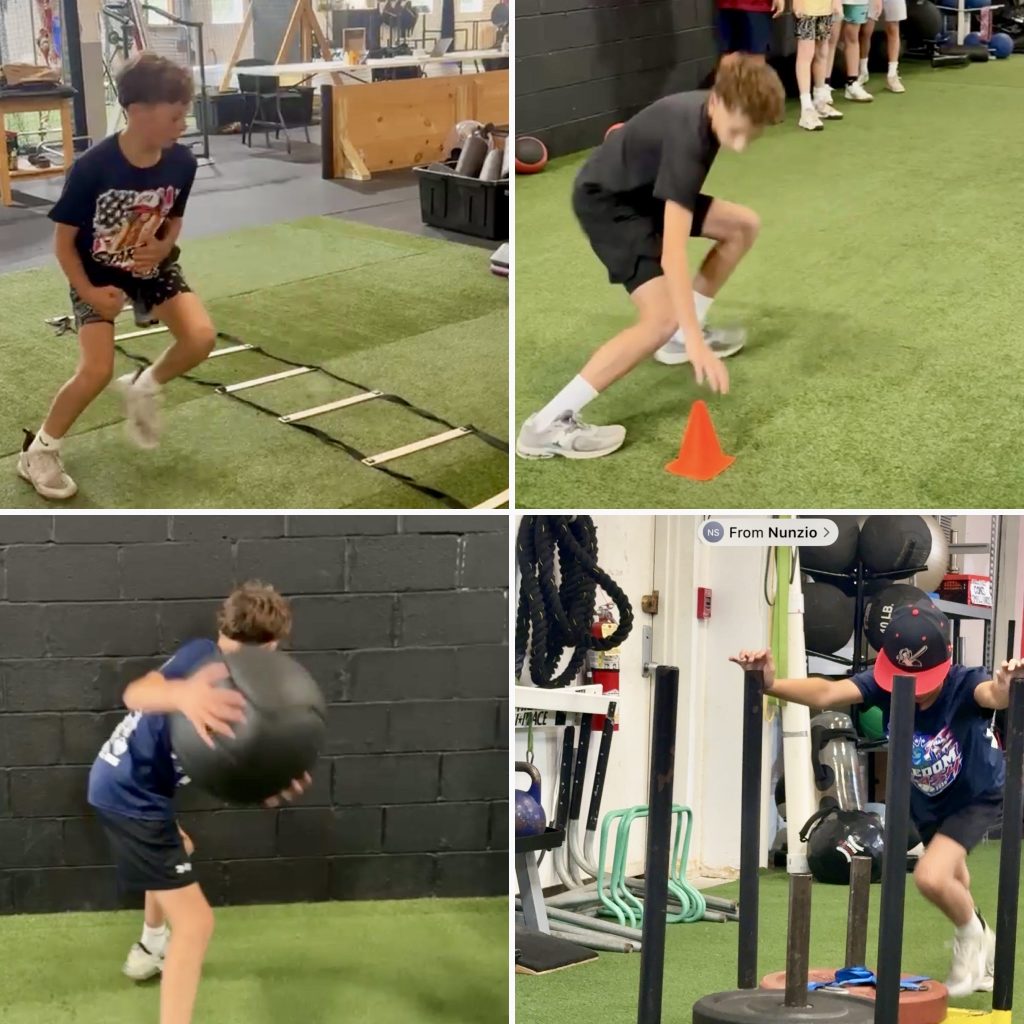
With 12- to 13-year-old baseball players aiming to smoothly transition from youth fields to larger diamonds, proper physical conditioning is paramount. At this pivotal age, adolescent bodies undergo rapid growth spurts, meaning a structured fitness routine is not optional. It is essential for performance, long-term athletic success, and, most importantly, reducing the risk of injury.
Why Conditioning Matters in Youth Baseball
Baseball is fundamentally a sport of explosive, short-duration movements. Proper conditioning prepares a young athlete’s body to sprint from a static position, throw a ball across the diamond with maximum velocity, or rotate within 250 milliseconds to help drive the ball out of the infield, and possibly even over the fence.
Equally important is the role conditioning plays in injury prevention for 12- to 13-year-olds. During growth spurts, bones often grow faster than the surrounding muscles and tendons, leading to tightness and an increased risk of overuse injuries from the repetitive stress of throwing.
How Conditioning Enhances Core Baseball Metrics
Conditioning directly improves a player’s impact on the field. A well-rounded, age-appropriate regimen focused on bodyweight control, agility, and rotational power can help improve several core performance metrics:
-
- Throwing Velocity and Pitching Mechanics: Power does not come from the arm alone. Core and lower-body training allow players to generate explosive ground force, helping take the burden off the throwing shoulder while increasing throwing velocity. Exercises like sled marches help build lower-body strength and power.
Sled March
-
- Bat Speed and Power: Hitting is a highly complex rotational movement. Exercises like medicine ball throws and planks build stability in the hips and trunk, allowing for faster hip rotation and more powerful contact at the plate.
Med Ball Throws
Planks
-
- Base-Running Speed and Agility: Quickness down the first-base line or while tracking a fly ball in the outfield requires exceptional acceleration. Ladder drills, when performed explosively, and plyometrics teach the nervous system to recruit muscle fibers quickly, improving a player’s first-step power and change-of-direction mechanics.
Ladder Drills / Plyos
-
- Stamina and Recovery: While baseball is primarily an anaerobic sport, a solid aerobic baseline helps players recover faster and maintain running speed and throwing velocity between pitches, high-effort plays, and back-to-back tournament games.
The Modern Challenge: The Youth Fitness Deficit
The need for structured conditioning has never been more urgent. Today’s 12- to 13-year-olds are stepping onto the diamond with lower levels of baseline physical activity than generations before them.
Data highlights a clear downward trend in youth physical activity over the past decade. According to the U.S. Report Card on Physical Activity, only 20% to 28% of children and adolescents meet the recommended 60 minutes of daily physical activity. More specifically, organized sports participation among boys has experienced a quiet but steady decline.
The World Health Organization points to the modern digital revolution as a major driver, noting that recreational screen time has increasingly replaced the unstructured “free play,” such as riding bikes or playing backyard sports, that naturally helped build health and athleticism in past generations.
Final Thoughts
Final Thoughts
Because modern players spend more time sitting and less time moving naturally outside of practice, they often lack the baseline muscular strength and coordination that young boys developed through everyday play just 5 to 10 years ago.
Introducing a structured conditioning program for 12- to 13-year-old baseball before we migrate to strength training in older and older helps bridge this gap. It builds a strong athletic foundation, helping young athletes stay healthy, confident, and competitive every time they step onto the field.
That is why off-field conditioning is such a high priority for our “RPP Revolution” travel teams here at RPP. If interested, you can learn more about our travel program here.
See ya’ in the gym….
By Nunzio Signore (RRP Baseball)