How to Increase Athleticism… Develop Efficient Movement

On any given day you can log into your daily feed on Twitter and scroll through a plethora of verbal grudge matches between strength coaches, pitching/hitting coaches and movement gurus arguing.  Yes, arguing and criticizing each other’s ideology about athletic performance and how to improve it. These verbal assaults are usually fueled by the fact that one individual’s concept, theory, protocol or whatever you choose to call it may not line up with another’s. In other words, “it’s different”.  For those of you that have the insight to be able to “discuss” and not argue, this blog is not targeting you, however you may want to come along for the ride. Continue reading “How to Increase Athleticism… Develop Efficient Movement”

Pitching Biomechanics: 3 Factors in Kinematic Sequence

Pitching biomechanics

In conducting a pitching biomechanics evaluation and assessing a motion capture session, one of the most important things to examine is the kinematic sequence. This consists of the angular velocities and corresponding timing of the pelvis, torso, shoulder, and hand. These angular velocities can reach speeds upwards of 5000 º/s, and as such cannot be measured through standard 2-D video analysis thus requiring a 3-D motion capture system. This simple graph below off our Qualisys Motion Capture system is key to determining how efficiently an athlete is transferring energy from the ground up, through their body, and into the ball.

Continue reading “Pitching Biomechanics: 3 Factors in Kinematic Sequence”

2 Reasons Why Baseball Band Workouts Can Get Ugly!

band workout for pitchers

Let’s face it, everyone loves to throw hard, but we have to make sure we’re going about it the best and safest way possible. For pitchers and ball players, learning the correct way to perform baseball band workouts and take care of the arm, shoulder and body should be a top priority, not only during the season but year-round as well. Continue reading “2 Reasons Why Baseball Band Workouts Can Get Ugly!”

Why the Baseball Spin Axis Is Important for Pitchers

baseball spin axis

The Rapsodo Pitching camera provides an incredible amount of information by pitch type.  Just as relevant, however, is how each individual pitch behaves versus the others.  In evaluating our pitcher’s ball movement charts, we generally work with them to develop what we refer to as “clusters”. They form when a pitcher can consistently repeat the baseball spin axis and direction by pitch type. Continue reading “Why the Baseball Spin Axis Is Important for Pitchers”

Pitch Design with Seton Hall’s O’Neill… How to Turn Good into Great

Pitch development is a big part of the overall training culture here at RPP. Once athletes have developed a good base of body awareness in the weight room as well as throwing volume it’s time to steer the focus on getting guys out. In other words, getting pitches to move while throwing strikes.

Seton Hall’s Brennan O’Neill came to us this July, during the summer unlike anything any of us have ever experienced before.  However, even with a shortened period of time we managed to get a lot done. Continue reading “Pitch Design with Seton Hall’s O’Neill… How to Turn Good into Great”

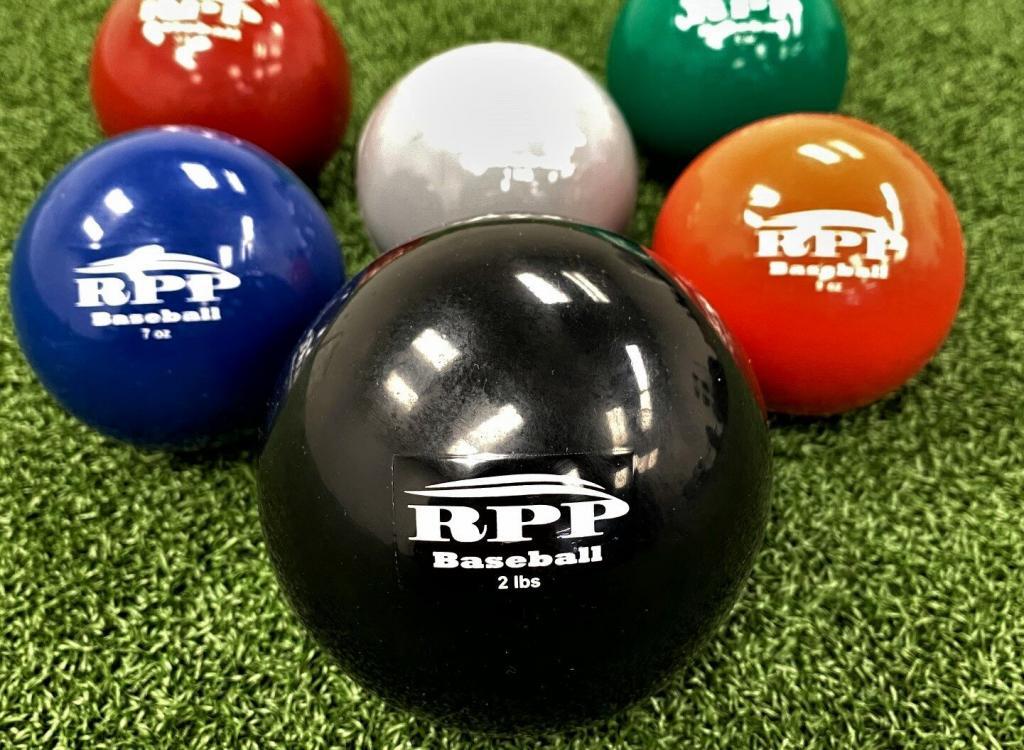
A Guide on Which Plyo Balls Pitching Drills Are For You?

Plyo Balls

Throwing programs often include Plyo Balls drills for improving pitching mechanics and overall movement patterns.  They have been around for quite some time and we’re not here to re-invent the wheel.  However, we’re going to review which ones we recommend and what has worked, through trial and error, for our pitchers over the years.  Here we go…

    • Our Recommended Plyo Balls drills
    • Their Purpose
    • What issue they’re used to Improve
    • Performance cues
    • Sets and reps

Continue reading “A Guide on Which Plyo Balls Pitching Drills Are For You?”

A Pitching Biomechanical Evaluation to Create Better Fixes

By Nunzio Signore (Owner/Operator RPP)

pitching biomechanics

Pitching is a MOVEMENT and should be analyzed as such. In a pitching biomechanical evaluation such as a mocap assessment that we use here at RPP, there are many important metrics.  Specifically there are timing and angular velocity issues that you can’t see with the same amount of accuracy when using a static assessment or 2D video analysis.  Knowing WHEN these movements are happening at various points in the delivery, and for certain metrics the SPEEDS at which they are happening, can be more telling than simply looking at static positions.

But, the value of the information, like every other piece of tech we utilize, is not in the numbers, but what we do with the information, in other words… the FIXES. This is where blending tech with great coaching can be a game changer. Continue reading “A Pitching Biomechanical Evaluation to Create Better Fixes”

Why Baseball Biomechanics Information is a Game Changer

baseball biomechanics

Until not long ago baseball biomechanics information from motion capture systems (mocap) was primarily available in research labs, rehab facilities or biomechanics departments at universities.  Much of the work in this arena has been performed by biomechanists who specialize in the study of movement. They generally use the principles of physical mechanics combined with biology to understand:

    • How we move
    • How we can move more effectively and efficiently
    • Why we get injured and how to reduce the incidence of injury

Two prominent figures in the world of baseball mocap have been Dr. Glenn Fleisig and Dr. James Andrews, dating back to 1985 with their work at the American Sports Medicine Institute (“ASMI”).

But times are changing fast… Continue reading “Why Baseball Biomechanics Information is a Game Changer”